Snowstorm Expected to Hit Parts of US, NYC Could See 10 Inches ❄️🌨️
Winter, it seems, refuses to pack its bags gracefully. This time, the northeastern United States braces for a snowstorm promising to douse familiar streets with a fresh drape of white—New York City, flirting with a forecast of up to 10 inches, stands at the eye of this chilly ode to seasonal stubbornness. One might wonder why a city that has survived notorious blizzards and near-apocalyptic winters still shudders at the prospect of an accumulation measured in mere inches. Could it be that urban resilience is, ironically, fragile in its confidence? 🗽
The Looming Storm and Its Icy Fingers
Forecasters from the National Weather Service have been preparing the public for a system swirling from the Midwest through the Appalachian spine and poised to unleash a snow-laden barrage on the Atlantic corridor. Ground zero? The metropolitan mosaic of New York City, where concrete and commerce routinely clash with elemental forces.
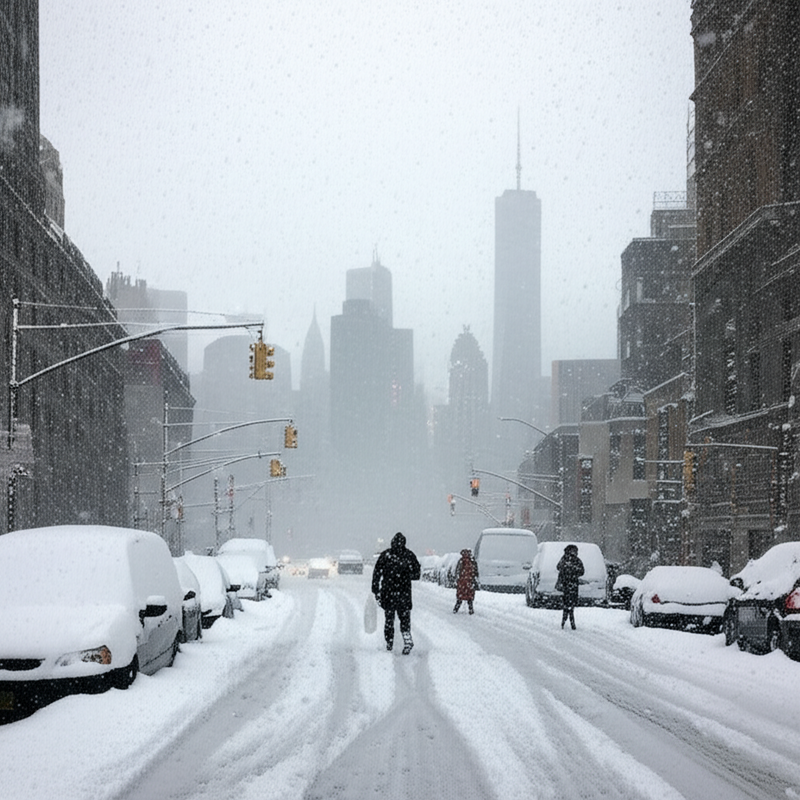
Predicted accumulations: 8 to 10 inches across NYC boroughs, with peripheral areas in New Jersey and Connecticut expected to see 5 to 8 inches. Temperatures will hover stubbornly below freezing, allowing snow to settle like a slow painter perfecting a winter tableau.
And yet, in a city that prides itself on constant motion, even a moderate snow can bring the wheels of industry to an ironic standstill. Subways don’t melt; they freeze. Buses linger like cautious sentinels, while frustrated New Yorkers, accustomed to the rhythmic honking cacophony, now find their symphony muted by the soft crunch of slipperiness beneath their boots.
Urban Snowfall: A Clash of Opposites
It’s the classic paradox of modern winter in the city: a metropolis designed for 24/7 hustle transformed suddenly into a silent gallery where storm and structure stare one another down. Here lies a striking antithesis — a landscape both engineered to withstand chaos and helpless against a handful of snowflakes. Street lamps bloom like frosted sentinels, sidewalks shift from bustling arteries to treacherous veins, and beneath it all, the subway pulses, a metaphorical heartbeat keeping the city’s frozen rhythm alive.
But this storm also exposes the irony that no amount of technological wizardry can undo nature’s cold artistry. Snow is the great urban interrupter — the queasy reminder that beneath the layers of glass and steel, nature still holds veto power.
Beyond the Obvious: What Does 10 Inches Actually Mean?
Pause for a moment: 10 inches. For some, it’s a mere annoyance, a trivial chapter in winter’s cronicle. For others, it’s a disruptive maelstrom, capable of snarling transit, grounding flights, and fracturing plans. The number itself is a winter riddle—like comparing an old friend’s warm embrace to a stranger’s icy handshake.
Recent history offers sharper contrasts. The Blizzard of ’96 crippled the city with over 20 inches, burying dreamers and doomsayers alike under a shared blanket. Fast forward to the relatively pedestrian winter of 2018, when a few inches managed to paralyze streets and shut schools, revealing that perhaps this city has become more sensitive—and maybe a little less prepared—over time.
This snowstorm arrives as a test, a small yet intricate reminder that even in an era of climate unpredictability, the basics still reign supreme: salt trucks ready to scatter their bitter granules; transit workers buckling up for the daily battle; New Yorkers juggling their layered wardrobes like chess masters anticipating each move of winter’s relentless gambit.
What to Expect: The Human Element Amid the Flurries
Snowstorms bring with them more than just weather: a societal choreography that’s part survival, part ritual. Children, emboldened by the promise of snow days, dance between sidewalks and melting piles. Grocery stores rush to stock shelves as if hoarding against the next ice age. The city, in all its complexity, sheds a bit of its steely demeanor and reveals a quieter, reflective pulse.
Though public agencies emphasize readiness and resilience, many New Yorkers instinctively associate snow with a quirky sort of urban melancholy—and a tinge of nostalgia. Does anyone really miss the days when a snowstorm meant neither calls canceled nor meetings done virtually, but playgrounds bursting with impromptu snowmen and sleds? There’s a bittersweet longing for the pre-pandemic winters, where the city’s icy breath wove people together instead of pulling them apart.
Snowstorm Statements: What Lies Beneath the Forecast
Is the city truly unprepared, or is this mere ritual anxiety? The answer is layered much like the snow itself. The infrastructure is better than decades ago, but growing population density and aging systems strain under repeated assault. The irony thickens: the very progress meant to safeguard us creates new vulnerabilities—communications networks stressed, transportation bottlenecks magnified.
And we are reminded — perhaps uncomfortably — that nature remains the ultimate arbiter. In a digital age where climate events can be forecast down to the minute, the aesthetic of a snowfall still wraps the city in uncertainty as tangible as the cold, crisp flakes themselves.
Winter’s Last Word
When the first flakes begin their silent descent, will New York crumble or rise with defiant grace? Perhaps the real story isn’t the 10 inches anticipated but how a city waltzes with its oldest visitor — snow, the quiet interrupter and relentless artist reshaping pavements, routines, and moods alike. Like a novel both familiar and strange, winter writes fresh chapters every year, challenging us to read between the lines of frost and find warmth in its stark embrace.
So, as shovels stand ready and coffee pots brew strong, one can’t help but wonder: is it the storm outside or the storm inside each bustling commuter that will truly define this snowy narrative? ☕❄️🚇